
I Will Trust You Over Me: What I Learned About Fear, Intuition, and Self-Trust
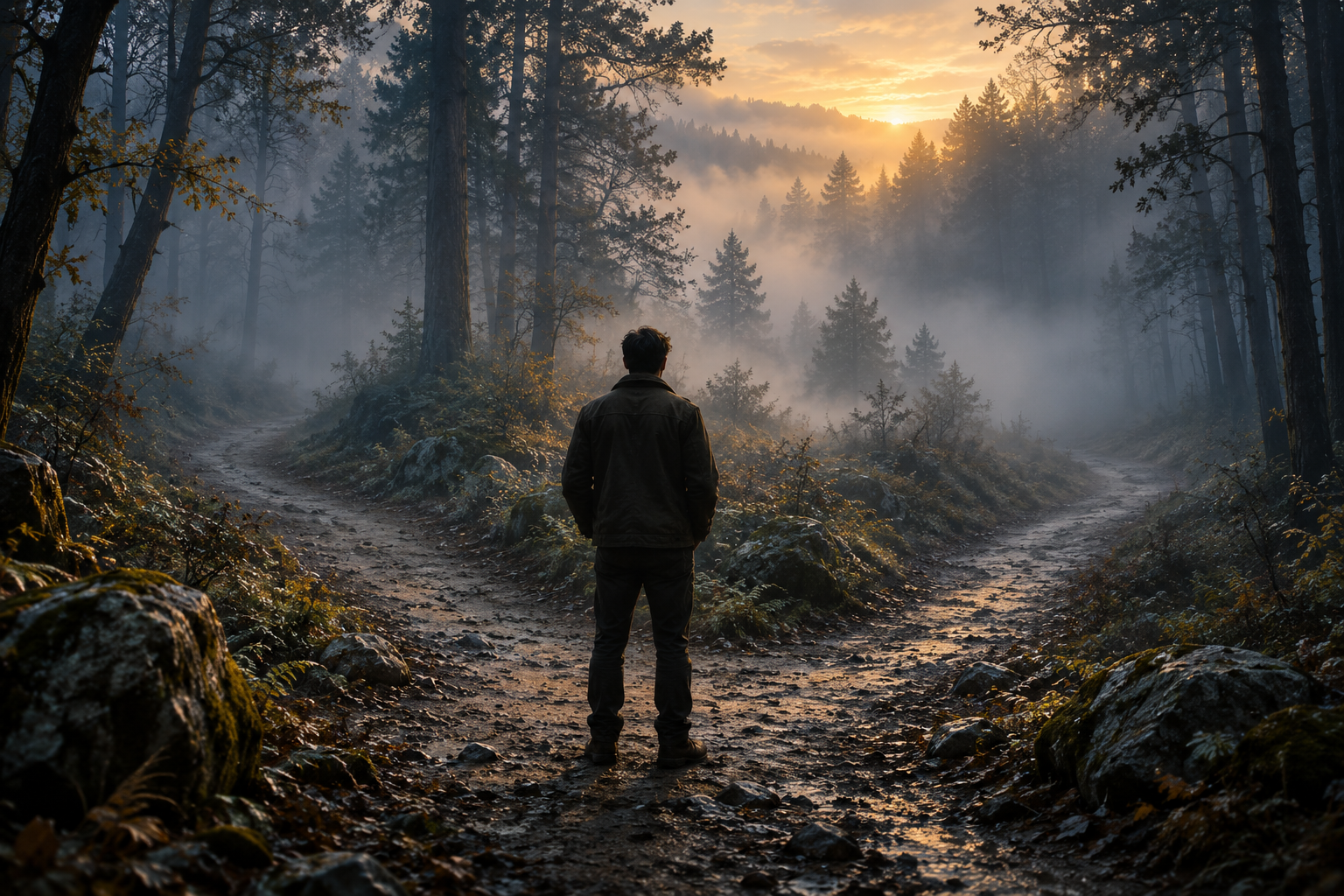
It usually happens late at night. You're lying awake with a decision sitting on your chest. Stay or go. Speak up or let it slide. Reach out or finally let them be. You've asked your friends, read the articles, maybe prayed or pulled a card or two, and every hour the answer changes. At midnight you're certain you need to leave. By two you're certain leaving would be the biggest mistake of your life. Both feel like the truth. Both feel like your gut talking.
So which one is intuition, and which one is fear?
I wrestled with that question for years. The answer I eventually found wasn't the one I expected, and it started with a sentence I said out loud long before I understood what it would cost me.
The Answer I Was Given
One of my teachers taught me that fear is loud and intuition is soft and quiet. Spirit speaks to us from a higher perspective, calm and patient, while fear is rooted in the ego and shoves us toward action before we're ready. Fear demands. Intuition invites.
That made complete sense to me, and it still does. When I'm grounded, it's one of the most useful tools I have. I can pause, notice whether what I'm feeling is urgent or settled, and usually tell which voice is steering.
The problem was that the question never showed up when I was grounded.
When the Storm Makes Everything Sound True
The season when I needed this answer most was the darkest stretch of my life. My ex, Penny, passed away just two weeks after we separated. I was lost in grief, and my life felt aimless. The relationship that followed became my purpose. It felt like the only footing I had left. The irony, which took me years to see, was that it was the one place in my life where I had no footing at all.
It was a trauma bond, and it lived on constant confusion. I questioned every thought, every feeling, every memory. I remember one moment clearly. After months of feeling neglected, I finally found the courage to voice how much I was hurting and how unfairly I felt treated. By the end of the conversation, it had been turned around. Everyone was upset with her. Nobody understood her. She just wished one person would.
In that moment, I shut my feelings down. I shut my needs down. I decided to become a rock in her life, and I stonewalled the one person I most needed to hear from, which was me.
Here's what I didn't understand then. When we're in survival mode, our nervous system is running the show. Every insecurity is turned up to max, and the part of the brain that weighs things calmly goes quiet. We become desperate for truth, desperate for anything that ends the suffering. And a desperate mind can make any answer sound plausible, and any answer sound soothing.
That second part matters. We tend to think fear always feels like panic, but fear can also feel like relief. Deciding not to have the hard conversation brings a wave of calm. Deciding to stay one more month brings a wave of calm. That calm is easy to mistake for the quiet voice of intuition, when really it's the exhale of a nervous system that got to avoid something scary a little longer.
Relief and peace are not the same thing. Relief is fear getting what it wants. Peace is what's left when you stop running.
My teacher's wisdom wasn't wrong. It was a tool for calmer water, and I was trying to use it in a hurricane. Regulation is still the first step. Breathing, pausing, and coming back to your body are how you find your way out of the storm, and I've written about that process in When Fear Feels Like Truth. But there was a harder lesson waiting for me on the other side of it.
What I Found in the Stillness

The answer didn't come until I was well out of the storm, and it didn't come from anywhere glamorous. I was standing in the shower, meditating and reflecting on everything I had been through, when it landed.
I had always wondered why I couldn't see the truth while I was in it. In that moment I realized I had seen it. I just also saw the potential. I saw who she was, and I saw who she could be, and both were equally persuasive. The one I needed to see was the one I wasn't ready for.
Then I remembered something from near the very beginning, back when things first started to feel off and her explanations didn't add up. I had looked at her and said, "I will trust you over me."
That was the moment I abandoned my self-trust. And it took me years of work to reclaim it.
Of course I couldn't tell fear from intuition. I had handed away the only voice that could tell the difference.
That's when the whole question shifted for me. Regulation can tell you whether you're in danger. It can't always tell you which path is right. We may never truly know what the truth is or which way to go, and life rarely hands us that kind of certainty, especially when it matters most. So maybe the real question was never which voice is true. Maybe it's whether we trust ourselves enough to choose.
That, to me, is what true intuition is. It's being faced with something far beyond your capacity or understanding, making the choice you feel is right, and staying with it. That doesn't mean every choice is the right one. It means that whatever you choose is the one you have to live with. Self-trust isn't certainty that you chose correctly. It's knowing you can carry what comes next, including the honesty to change course if you were wrong.
What Our Wounds Are Asking For
Looking back, I can see every one of my wounds was wide awake during that season, and each one was asking me for something different. Inadequacy asks us to trust in our own experience. Rejection asks us to value ourselves more than the ones who leave. Abandonment wants us to know we can take care of ourselves. And self-doubt needs us to show the fuck up and follow through, even while we feel completely helpless.
That word is the root of it all.
Helplessness is the thing we fight most violently to avoid. It's what we unconsciously dread above everything else, and it feeds our need to control outcomes, people, situations, and relationships.
For me, control looked like self-improvement. I quit drinking. I took up kickboxing. I started an apprenticeship. I hired a life coach. On paper, I was doing everything right. But I was doing the right things for the wrong reasons. I was changing everything I could about myself, because if I was the problem, then the problem was something I could fix. That felt far better than admitting there was nothing I could do to make someone give me the love and respect I was fighting for.
This is why the fear-or-intuition question gets so loud when life falls apart. We aren't only looking for the right answer. We're looking for a way out of feeling helpless, and fear is always happy to sell us one.
Build It Before the Storm

Here's the practical piece, and it's the part I wish someone had told me sooner. You can't build discernment in the middle of the storm. You build it on the ordinary days.
Self-trust is built the same way trust is built with anyone else, through kept promises. If a friend told you they'd show up and then didn't, over and over, you'd stop believing them. Your nervous system keeps that same record on you.
So start small. Go to bed when you said you would. Make the phone call you've been putting off. Sit in silence for ten minutes when you told yourself you would. Say no when you mean no. None of these feel dramatic, but each one is evidence that you are someone who follows through. When the dark days come, and they will, that evidence is what you stand on.
Surrender What You Can't Hold
Near the end of that relationship, I was staring at a reply that was only a few words long, feeling more alone than I ever had. And something shifted, so subtly I almost missed it. Maybe what I had been fighting so fervently for was never mine to hold.
There were two paths in front of me. I could keep fighting for the love and respect of someone who was never going to give it to me, or I could walk away. I didn't walk away that day. First I had to come to peace with that truth, and that took months. Only then could I act. Neither path ever came with certainty. There was only the choice, and the knowledge that I would have to live with it.
That's what surrender asks of us. Not a decision made in the middle of the spiral, but one made once the storm has settled enough to see. We surrender to the unknown, and even to the fear itself, make a choice, and trust ourselves with it, even when it doesn't feel right in the moment. We release our grip on what was never in our control so we have the strength to grasp what is.
Because that's when this question arrives most. Not on the easy days, but in the moments that feel far bigger than us, when the ground is moving and every answer sounds convincing. Those are the moments this work is for.
If you're in that place right now, sit with these:
Where have I told someone, in words or in actions, that I trust them over me?
Is what I'm feeling peace, or is it relief?
What is one small promise I can keep to myself today?
You may never be handed certainty. But you can become someone you trust to walk into the unknown anyway. And that might be the most honest form of intuition there is.
If you're in the middle of this right now and can't find the thread back to yourself, you don't have to untangle it alone. Through New Ashla Coaching, I work with people who are learning to trust themselves again, and you can book a coaching session there whenever you're ready.
With love and gratitude,
Michael Perry
Ad Lucem
Continue Exploring These Themes on the New Ashla Podcast
Conditioned Fear vs. True Inner Knowing: What's the Difference?
The conversation that started this post. Justin and I explore the difference between natural fear and conditioned fear, and why stillness matters before you act.
Stoicism, Taoism, and the Art of Letting Go
A conversation on the paradox of control, what is actually yours to hold, and why surrender was never meant to mean giving up
