
Inner Child Work Is Not What You Think It Is

There is a version of you that has been sitting at the table your whole life, waiting to be heard.
Not the version that shows up at work. Not the one who learned how to manage a room, keep the peace, or push through discomfort without flinching. Not the one who figured out what to say and when to say it so that everyone around you felt taken care of.
There is a younger version. A smaller one. One who learned early that their voice was not as important as the needs of the room. One who adapted, performed, withdrew, or acted out because no one taught them that what they felt actually mattered.
Most people have heard the phrase "inner child work" by now. It shows up in therapy recommendations, social media posts, self-help books, and wellness content everywhere you look. But for something talked about so often, it is still widely misunderstood.
Inner child work is not about regression. It is not about wallowing in the past or blaming your parents for everything that went wrong. And it is not some soft, sentimental exercise where you close your eyes and imagine hugging a younger version of yourself and suddenly feel whole.
Inner child work is the practice of finally giving a voice to the part of you that was denied one.
For some people, that looks like learning to play again. Learning to be spontaneous, silly, curious, creative without needing permission or productivity to justify it. For others, it looks like something completely different. It looks like giving that inner child the structure, the discipline, the patience, and the stability they never received. It is not one-size-fits-all. It requires balance, honesty, and a willingness to look at yourself with more depth than most people are comfortable with
And that is where the real work begins.
You Were Put Here to Take Care of One Person
There is a truth that most of us spend years avoiding, and it is deceptively simple.
You were put here with the primary responsibility of caring for one human being. That human being is you.
Not in a selfish way. Not in a way that ignores your relationships, your responsibilities, or your role in the lives of others. But in the way that acknowledges a fundamental reality most of us were never taught: if you do not know how to care for yourself at the deepest level, everything you try to build on top of that neglect will eventually crack.
Inner child work is one of the most honest ways to start closing that gap. It asks you to go inward, to get quiet enough to hear what has been buried, and to stop treating the youngest, most vulnerable part of yourself like an inconvenience.
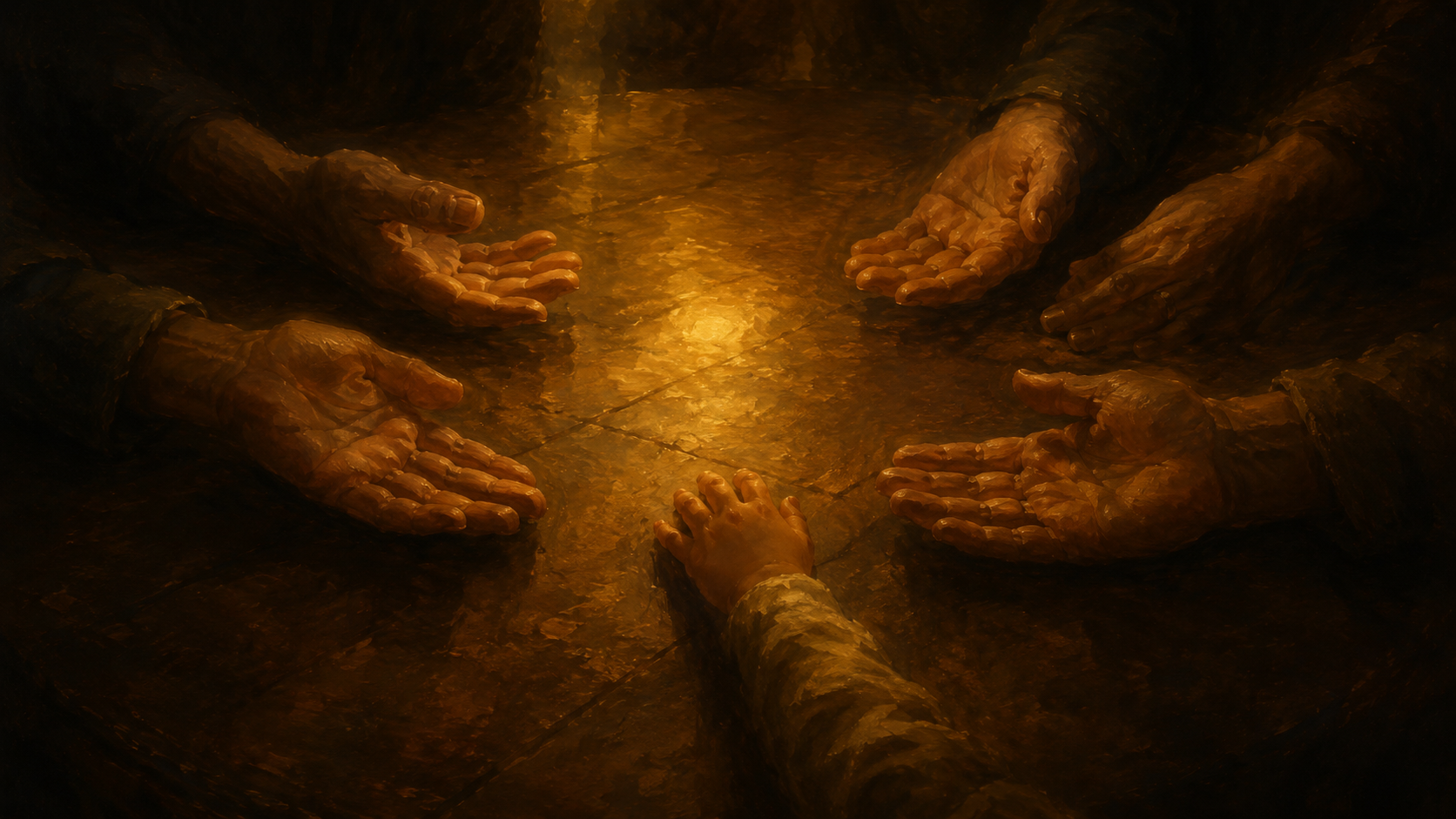
For a lot of people, that part has been running the show from the shadows for years. Not because it is broken. Because it was never given a seat at the table.
The Round Table
I want to share something that became real for me during my own inner work, because it changed the way I understood myself and the way I make decishions to this day.
When I started doing deeper shadow work, what I found was that I had an entire internal system operating beneath the surface. Think of it like a round table. Seated around that table were different parts of me, each with a role. There was understanding. Compassion. The hero. The friend. The believer. The moral authority. Each of them had a voice. Each of them got a vote when it came time to make a decision, respond to a situation, or navigate something difficult.
But there was one part sitting at that table who never got a vote.
My inner child.
He was there. He was always there. But his voice did not carry weight. His needs were not consulted. His feelings were not factored into the decisions being made on his behalf. He could exist in the background, and as long as what he needed did not inconvenience anyone else or make anyone uncomfortable, he was left alone.
That is not care. That is exile
When the Hero Becomes the Firefighter

This is where inner child work and what is sometimes called parts work begin to overlap, and understanding that connection can change everything about how you relate to yourself.
In parts work, we recognize that the psyche is not a single unified voice. It is a system. We carry different parts that developed at different times in our lives, usually in response to pain, fear, or environments that required us to adapt in order to survive emotionally. Some of those parts became protectors. They learned to manage, control, deflect, perform, fight, or shut down so that the most vulnerable parts of us would not have to feel the full weight of what was happening.
When I looked honestly at my own system, I realized something I was not expecting. The hero, one of the parts I identified with most, was not actually heroic in the way I thought. He was a firefighter. His job was not to lead me toward growth or truth. His job was to react. To rush in when emotions got too big, when vulnerability got too close, when something threatened the stability of the system. He was not rescuing anyone. He was containing damage.
And the part he was most focused on containing? My inner child.
My inner child was the exiled part. The one whose feelings, instincts, and needs had been pushed to the margins because somewhere along the way, I learned that honoring them came at too high a cost.
Here is what that looked like in practice. My inner child had me constantly chasing adventure, living recklessly in the moment, running from stillness because stillness meant feeling things I had been taught to avoid. On the surface, it looked like spontaneity. Underneath, it was a part of me acting out because he had no other way to be heard. He did not need more freedom. He needed structure. He needed discipline. He needed someone to teach him patience and responsibility, not as punishment, but as love.
What he needed most, though, was a vote.
He needed to be consulted. He needed his perspective to matter when decisions were being made about how I felt, what mattered to me, and what I was willing to tolerate. And what I eventually realized is that his vote was not just important. In many cases, it was the most important one at the table. Because that inner child is the part of you closest to your actual feelings. Before the filters. Before the rationalizations. Before the performative maturity that tells you to rise above things you have every right to feel.
When you exile that part, you do not get rid of it. You just lose access to the truest signal you have.
The Difference Between Pain and Harm
One of the deepest things my inner work revealed was a pattern I had been living inside for years without recognizing it.
My nervous system never learned the difference between causing someone pain and causing someone harm.
Those two things are not the same. Harm is destructive. It damages. It disregards another person's dignity or safety. Pain, on the other hand, is sometimes an unavoidable consequence of honesty, growth, boundaries, and change. Telling someone the truth might cause them pain. That does not mean you harmed them. Saying no to something that costs you your peace might disappoint someone. That is not harm either.
But when your system cannot distinguish between the two, something happens. You start organizing your entire life around making sure no one ever feels uncomfortable because of you. Your inner child learns that his needs are acceptable only when they do not cause a ripple. He can run around, act out, seek adventure, do whatever he wants, as long as none of it makes anyone else feel anything difficult.
That is not freedom. That is a leash disguised as consideration.
And it is one of the most common forms of self-abandonment there is. You silence the truest part of yourself not because you do not care about that part, but because you were conditioned to believe that caring for yourself and caring for others were mutually exclusive. They are not.
Where to Start
If you are new to this kind of work, you do not need to have it all figured out before you begin. Inner child work is not something you master. It is something you practice. And the entry point is simpler than most people expect.
Start by listening. Pay attention to the moments when your emotional reaction feels disproportionate to the situation. When a small rejection lands like a devastation. When a perceived slight sends you spiraling. When you feel an urgency to perform, to fix, to please, or to disappear. Those reactions are not random. They are often your inner child responding to an old wound through the lens of a present moment.
Get curious about your parts. You do not need to go deep into formal frameworks to start noticing the different voices inside you. Who shows up when you are scared? Who takes over when you are angry? Who do you become when someone needs something from you? And underneath all of those protectors and performers, who is the one being protected? What are they feeling? What do they need that they have never been allowed to ask for?
Ask what was denied. Not what went wrong in your childhood, necessarily, but what was missing. Were you allowed to have needs? Were your emotions welcomed or managed? Were you given structure, or were you left to figure it out alone? Did anyone teach you that your feelings were valid even when they were inconvenient? The answers to those questions will start to show you what your inner child is still looking for.
Give that part a vote. This is perhaps the most practical and the most transformative step. The next time you are making a decision, especially one that involves your boundaries, your feelings, or your sense of what matters, pause. Ask yourself what the youngest part of you needs in this moment. Not what the responsible part thinks you should do. Not what the people-pleasing part is afraid will happen if you choose yourself. What does the child actually need? And then let that voice carry weight.
You may find, like I did, that the child's vote is the most honest one in the room.
The Work Behind the Work
Inner child work is not a phase. It is not a chapter you complete and move on from. It is an ongoing relationship with the part of yourself that holds the most unfiltered truth about who you are, what you need, and what you have been sacrificing in order to keep everyone else comfortable.
It is shadow work. It is parts work. It is nervous system work. It is the willingness to look at your own internal system with honesty and compassion and to stop exiling the parts of yourself that deserve to be at the table.
You were put here to care for one human being. That starts with the one who has been waiting the longest to be heard.
If this is resonating with something inside you, and you are feeling the pull to go deeper into this work but are not sure where to start or how to navigate it on your own, I want you to know that this is one of the areas I work with most in coaching. Through New Ashla Coaching, we create space to meet those exiled parts honestly, understand the system that has been running beneath the surface, and begin building a relationship with yourself that is grounded in truth instead of performance. You can book a coaching session there whenever you feel ready to take that next step.
With love and gratitude,
Michael Perry
Ad Lucem
Blogs That May Resonate:
Shadow Work: Meeting the Parts of You That Learned to Hide — natural body link where parts work is introduced
The Cost of Staying Who You Used to Be — Related Reading after the close
Continue Exploring These Themes on the New Ashla Podcast:
Bringing Shadow to Light: Shadow Work and the Unity Mind Code — A deeper conversation on what shadow work actually is, why integration matters more than elimination, and how to navigate your emotional landscape with curiosity instead of fear. This links to The Missing Piece in Every Shadow Work Practice.
The Four Agreements and the Silent Contracts That Shape Us — How unconscious agreements formed early in life quietly run our identity, our relationships, and our sense of what we deserve. This links to A Guide to Personal Freedom: Book Review on “The Four Agreements.”
Letting Go of Who You Were to Become Who You Are — Why real transformation requires shedding old identities, and how self-trust, surrender, and honest self-assessment make that possible. This links to Letting Go of the Past to Embrace Your Future.
